
Thai Massage Benefits & Techniques Explained

What Is Thai Massage?

Thai massage is a traditional bodywork therapy that combines assisted stretching, acupressure, and rhythmic compression techniques to help improve flexibility, relieve muscle tension, and promote overall wellbeing. Originating in Thailand, this massage style differs from many Western and oil-based massages because it involves active body movements and stretching techniques performed by the therapist. Rather than focusing solely on relaxation, Thai massage aims to support mobility, balance, and physical comfort throughout the body. Today, Thai massage remains one of the most popular wellness treatments for individuals seeking relief from stiffness, physical fatigue, and everyday tension.

The Origins of Traditional Thai Massage

Thai massage has a long history rooted in traditional healing practices that have been passed down through generations. Over time, it evolved into a unique form of bodywork that combines stretching, pressure point techniques, and movement-based therapy. The treatment is often associated with improving energy flow, physical balance, and overall wellness. While modern Thai massage may vary between practitioners and spas, its core principles remain centered on restoring comfort and mobility throughout the body.

How Does Thai Massage Work?

Thai massage works by combining stretching movements, targeted pressure, and rhythmic bodywork techniques to address areas of tension and stiffness. Unlike traditional relaxation massages where the guest remains passive throughout the treatment, Thai massage involves gentle assisted movements that help mobilize muscles and joints. These techniques are designed to encourage flexibility, improve range of motion, and reduce physical tightness. The treatment is typically customized according to the individual's comfort level, flexibility, and specific areas of concern.

What Makes Thai Massage Different from Other Massage Treatments?

Many people compare Thai massage to other popular treatments such as Bali massage or Swedish massage. One of the biggest differences is the emphasis on movement and stretching. While many massage styles focus primarily on muscle relaxation through long strokes and massage oils, Thai massage incorporates active bodywork that encourages flexibility and mobility.
Key characteristics of Thai massage include:
  • Assisted stretching techniques
  • Acupressure and pressure point work
  • Rhythmic compression
  • Joint mobilization
  • Full-body treatment approach
  • Focus on flexibility and movement
Because of these unique techniques, Thai massage is often described as a combination of massage and assisted stretching.

How Facial Massage Supports Skin Wellness

One of the reasons people include facial massage in their self-care routine is because it complements their overall approach to skincare. Massage techniques may help stimulate circulation within the facial tissues while encouraging relaxation throughout the face. Many guests report that their skin appears more refreshed following treatment, while others simply enjoy the relaxing experience itself. Although facial massage is not intended to replace professional skincare treatments, it is often viewed as a valuable addition to a broader wellness and skincare routine.

Common Techniques Used in Thai Massage

Thai massage incorporates several techniques that work together to create a comprehensive bodywork experience.

Assisted Stretching

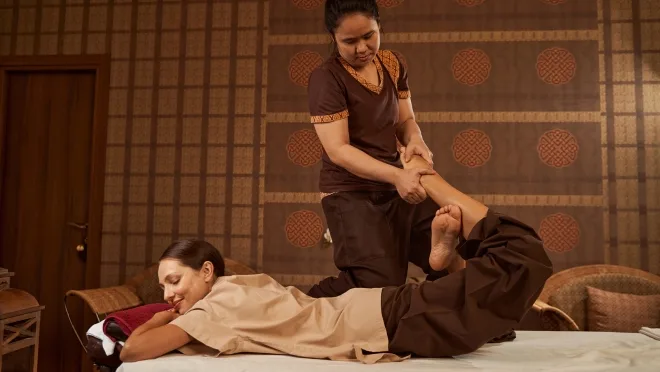
Stretching is one of the most recognizable aspects of Thai massage. During the session, the therapist may gently guide different parts of the body through stretches designed to improve flexibility and reduce muscle tightness.
Therapist performing a Thai-style assisted stretch on a relaxed woman lying face down on a massage table in a warmly lit room

Acupressure

Acupressure techniques involve applying pressure to specific areas of the body to help release tension and encourage relaxation.

Rhythmic Compression

Gentle compressions are used throughout the treatment to help relax muscles and improve overall comfort.

Joint Mobilization

Controlled movements may be used to help improve mobility and reduce stiffness in the joints and surrounding tissues.

Full-Body Bodywork

Thai massage often treats the body as a connected system rather than focusing on a single area. This allows therapists to address patterns of tension that may affect overall movement and comfort.

What Are the Benefits of Thai Massage?

Many people choose Thai massage because it offers a combination of relaxation and physical support.
Potential benefits may include:
  • Improved flexibility
  • Reduced muscle stiffness
  • Enhanced mobility
  • Greater range of motion
  • Relief from physical tension
  • Improved circulation
  • Reduced feelings of fatigue
  • Increased body awareness
  • Enhanced overall wellbeing
Individual experiences may vary, but many guests report feeling lighter, more mobile, and refreshed after treatment.

Who Is Thai Massage Best For?

Thai massage can be beneficial for a wide range of individuals.

Travelers

Long flights and extended periods of sitting can contribute to stiffness in the neck, back, hips, and legs. Thai massage may help relieve some of this physical discomfort.

Office Workers

Individuals who spend long hours sitting at a desk often experience tightness in the shoulders, neck, and lower back. Thai massage can help address these common areas of tension.

Active Individuals

People who regularly participate in sports, fitness activities, or physically demanding work may choose Thai massage to help maintain flexibility and mobility.

Individuals Experiencing General Stiffness

Those who feel physically tight or restricted in their movement often seek Thai massage as part of their wellness routine.

Is Thai Massage Good for Muscle Tension?

Muscle tension is one of the most common reasons people seek Thai massage. The combination of pressure techniques and stretching movements may help reduce tightness in commonly affected areas such as the neck, shoulders, back, hips, and legs. By addressing multiple muscle groups throughout the body, Thai massage can support overall physical comfort and mobility.

Can Thai Massage Help Improve Flexibility?

Flexibility is one of the primary reasons many people choose Thai massage. The stretching techniques used throughout the session are designed to encourage greater mobility and range of motion. While individual results vary, regular treatments may help support flexibility as part of an overall wellness routine.

Is Thai Massage Good After Exercise?

Many active individuals choose Thai massage after physical activity because it may help address muscle tightness and post-exercise stiffness. The treatment focuses on mobility and flexibility, making it a popular option for those looking to maintain physical comfort following exercise or recreational activities.

Is Thai Massage Suitable for Beginners?

Yes. Thai massage can often be adapted to suit different levels of flexibility and experience. Individuals who are new to massage therapy are encouraged to communicate openly with their therapist regarding comfort levels, pressure preferences, and any physical concerns. Techniques and stretches can be modified accordingly to create a comfortable experience.

How Often Should You Get a Thai Massage?

The ideal frequency varies depending on individual goals, lifestyle, and physical needs. Some people choose occasional treatments during their holiday or while recovering from travel fatigue, while others include Thai massage as part of their regular wellness routine. A qualified therapist can help recommend an approach that aligns with your personal needs.

What Should You Wear During a Thai Massage?

Thai massage is commonly performed while wearing loose, comfortable clothing that allows for movement and stretching. Comfortable attire helps the therapist perform stretching techniques safely and effectively. If specific clothing is required for the treatment, it is typically provided by the spa.

Frequently Asked Questions

Thai massage is a traditional bodywork therapy that combines stretching, acupressure, compression, and movement techniques to improve flexibility, mobility, and overall wellbeing.

Yes. Although Thai massage is generally more active than many traditional relaxation massages, many guests find it both relaxing and rejuvenating.

Thai massage may feel more intensive than some massage styles, particularly when addressing areas of tightness. However, the treatment should always be adjusted to remain comfortable.

Many people choose Thai massage specifically because it incorporates stretching techniques that support flexibility and mobility.

Thai massage sessions commonly range from 60 to 120 minutes, depending on the selected treatment and individual preferences.

Yes. Thai massage can be adapted to suit beginners and individuals with varying levels of flexibility and experience.

Conclusion

Thai massage offers a unique approach to wellness by combining stretching, acupressure, and movement-based techniques that support flexibility, mobility, and overall physical comfort. Whether you're experiencing travel-related stiffness, muscle tension from daily activities, or simply looking for a different type of massage experience, Thai massage can provide a balanced combination of relaxation and therapeutic bodywork. At Spa Bali Moon, our therapists tailor each session to the individual, helping create a comfortable and personalized experience that supports your wellbeing throughout your stay in Bali.