Massage Guide
Swedish vs Deep Tissue Massage

Swedish massage uses light to medium pressure and long, flowing strokes to relax the whole body. Deep tissue massage uses slow, firm pressure to work into the deeper layers of tight muscles, usually in a few problem areas. Choose Swedish to unwind and deep tissue for knots and long-standing tightness. This guide compares the two in detail.
What is Swedish massage?
Swedish massage is the classic Western oil massage, and the one most spas in Europe and North America mean by "a massage". It took shape in Europe in the 19th century and uses five basic strokes:
Effleurage: long, gliding strokes;
Petrissage: kneading and lifting the muscle;
Friction: small, firm circles;
Tapotement: light, rhythmic tapping;
Vibration: fine shaking of a muscle.
The pressure is light to medium, the pace is steady, and the therapist works over the whole body. Most people feel calm and sleepy afterwards.
What is deep tissue massage?
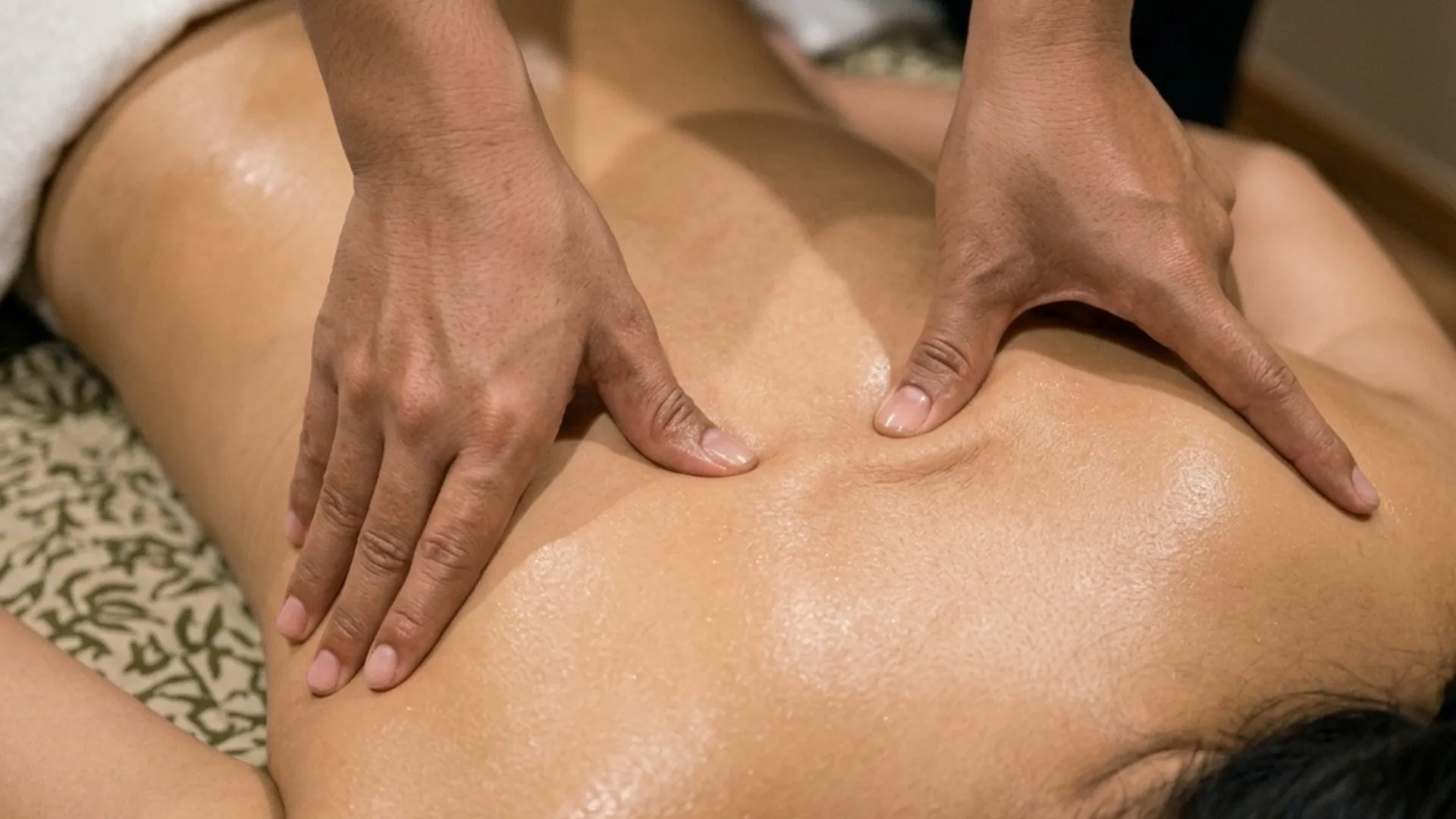
Deep tissue massage uses many of the same strokes, but much more slowly and firmly, to reach the deeper layers of muscle and the connective tissue around them. The therapist uses the forearms, knuckles, elbows and thumbs, waits for the muscle to soften, then goes a little deeper.
It usually focuses on a few areas, such as the upper back, neck, shoulders or lower back, instead of covering the whole body evenly. It feels intense, and some people are sore for a day or two afterwards.
Swedish vs deep tissue: the main differences
Swedish massage | Deep tissue massage | |
|---|---|---|
Pressure | Light to medium | Firm |
Pace | Steady and flowing | Slow |
Main goal | Relaxation | Loosening long-standing tightness |
Areas | Whole body | A few problem areas |
Therapist uses | Hands, mostly palms | Forearms, knuckles, elbows and thumbs |
How it feels | Soothing | Intense but bearable |
Afterwards | Calm and sleepy | Looser, sometimes sore for a day or two |
Which one should you choose?
Choose Swedish massage if:
you want to relax, de-stress or sleep better;
it is your first massage;
you don't like firm pressure;
you are tired after travel rather than sore.
Choose deep tissue massage if:
you have knots or tightness that keeps coming back;
your shoulders and neck are stiff from desk work;
you train, surf or do physical work;
light massages feel like they don't reach the problem.
If you are somewhere in between, ask for a medium-pressure massage with extra time on the tight areas. Most therapists can do both in one session.
Does deep tissue massage hurt?
It should feel intense but not painful. A good guide is 6 or 7 out of 10: strong, but you can breathe and relax into it. Sharp pain, numbness or tingling means the pressure is too strong or in the wrong place, so say so straight away.
Some people feel sore for a day or two afterwards, like after exercise. Drinking water, a warm shower and gentle movement help. Bruising is not normal; tell your therapist next time if it happens.
Who should be careful with deep tissue massage
Choose a gentle massage, or check with your doctor first, if you:
take blood-thinning medicine or have a bleeding disorder;
have or have had a blood clot;
have osteoporosis or a recent fracture;
have had surgery recently;
are pregnant.
The US National Center for Complementary and Integrative Health notes that the rare serious injuries linked to massage mostly involve vigorous styles such as deep tissue massage.
Where Balinese and sports massage fit
Balinese massage sits between the two: an oil massage like Swedish, but with acupressure and skin rolling, at a pressure you choose. Sports massage is firm like deep tissue but focuses on the muscles you use for your sport, often with stretching. Our guide to types of massage covers these and more.
In short
Swedish massage is a relaxing full-body massage with light to medium pressure. Deep tissue massage is slower and firmer, for tight, overworked muscles. We don't list a Swedish massage in Bali; the closest is our Balinese massage. For firm work, book a deep tissue massage in Seminyak, at our spa or at your villa or hotel.
Frequently asked questions
Is Swedish or deep tissue massage better for back pain?
For tight, sore muscles, deep tissue massage usually helps more. For back pain that comes with stress, a Swedish massage may be enough. See a doctor if back pain lasts more than a few weeks.
Can I ask for medium pressure?
Yes. Pressure is a scale, not two settings. Tell the therapist what you like at the start, and adjust it during the massage.
How sore will I be after a deep tissue massage?
Some people feel nothing; others are sore for a day or two, like after a workout. It should never feel like an injury.
Is deep tissue the same as sports massage?
No. Both are firm, but sports massage focuses on the muscles you use for your sport, often with stretching. Deep tissue works on tightness wherever it is.
How often should I get a deep tissue massage?
Give your muscles a few days between sessions. For ongoing tightness, once a week or every two weeks is common.
What should I do after a deep tissue massage?
Drink water, move gently and take a warm shower. Avoid hard exercise for the rest of the day.
Latest Posts
Keep reading
More Massage Guides
 Types of Massage: The Main Styles ExplainedThe main types of massage, what each feels like and who it suits, with a table to help you choose.Read the guide
 Bali Belly: Causes, Prevention and What to DoWhat causes Bali belly, how to avoid it, what to do if you get it and when to see a doctor.Read the guide
 Foot Reflexology ChartA foot reflexology chart with every zone explained, how to read it, and what reflexology can and can't do.Read the guide