Massage Guide
What Is Balinese Massage?

This guide explains where Balinese massage comes from, what each technique does, what happens during a session and how it compares with Swedish and Thai massage.
What is Balinese massage?
Balinese massage is the island's traditional style of massage, given on a massage bed with warm oil. The therapist works over the whole body, usually starting with the back and finishing with the head, and mixes slow, soothing strokes with firmer work on tight spots. The pressure can be anything from light to firm, which is why it suits first-timers as well as people who want their knots worked on.
In Indonesian, massage is pijat. "A massage in Bali" can mean many things, from a beach massage to a deep tissue massage in a spa. Balinese massage is one particular style.
Where Balinese massage comes from
Balinese massage grew out of the island's traditional healing. Village healers, called balian, have long used massage alongside herbal medicine, and the balian urut is the healer who specialises in it. Balinese healing knowledge, known as usada, was written down on palm-leaf manuscripts called lontar.
The style also carries influences from outside Bali. Indian Ayurvedic ideas arrived with Hinduism, acupressure came through Chinese medicine, and Javanese massage shaped the firmer kneading. Today Balinese massage is given in spas around the world.
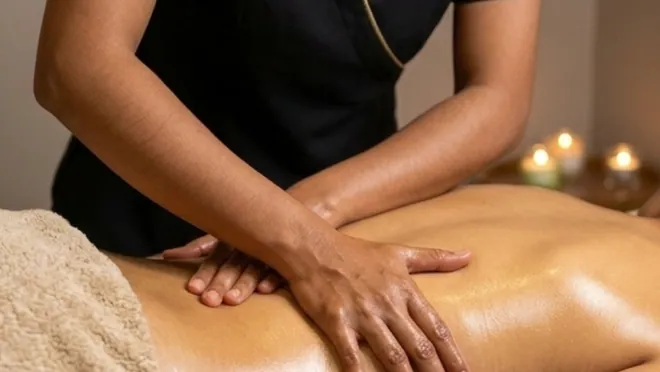
Balinese massage techniques
A Balinese massage moves between six techniques, often within a few minutes of each other.
Long gliding strokes
The therapist's palms and forearms glide along the back, legs and arms, spreading the oil and warming the muscles. Slow strokes calm you down, and they link one technique to the next.
Kneading
Larger muscles, such as the tops of the shoulders and the calves, are lifted and squeezed, much like kneading dough, to loosen general tightness.
Skin rolling
The therapist lifts a fold of skin between the thumbs and fingers and rolls it forward, usually across the back. It feels unusual the first time, and it is one of the techniques that sets Balinese massage apart from Swedish massage.
Acupressure
Thumbs and palms press and hold points along the muscles, especially either side of the spine, across the shoulders and on the soles of the feet.
Gentle stretches
Your arms and legs are moved through light stretches. They are much softer than in a Thai massage, and you stay lying down.
Warm oil
Most spas use a plant oil, often scented with flowers or spices such as frangipani, jasmine or lemongrass. The oil lets the hands glide and keeps the strokes smooth.
What happens during a Balinese massage
A 60-minute Balinese massage usually follows this order:
A short chat about pressure, the areas you want worked on and anything to avoid, such as an injury or sunburn.
You lie face down under a towel or sarong. Only the area being massaged is uncovered.
The back, shoulders and neck, the longest part of the session.
The backs of the legs and the feet.
You turn over for the fronts of the legs, then the arms and hands.
The neck, shoulders and scalp to finish.
Most sessions last 60 to 120 minutes. A longer session covers the same areas more slowly, not more firmly, and you can ask for lighter or firmer pressure at any time.
Balinese massage benefits
There is little research on Balinese massage itself, so its benefits are those of massage in general. The US National Center for Complementary and Integrative Health sums up the research like this: massage can ease stress and anxiety for a while, and it may give short-term relief from some kinds of back and neck pain.
What most people notice is simpler: looser shoulders and back, and a calm, sleepy feeling for the rest of the day. That makes it a good choice after a long flight or a busy day.
Balinese vs Swedish and Thai massage
Balinese massage | Swedish massage | Thai massage | |
|---|---|---|---|
Oil | Yes | Yes | No |
What you wear | Underwear, under a towel | Underwear, under a towel | Loose clothes |
Main techniques | Gliding, kneading, skin rolling, acupressure, light stretches | Gliding, kneading, friction, tapping | Pressing with palms, thumbs and elbows; assisted stretches |
Pressure | Light to firm | Light to medium | Medium to firm |
Where it comes from | Bali, Indonesia | Europe, 19th century | Thailand |
For a closer look at the two Asian styles, read our guide to Thai vs Balinese massage.
Other traditional treatments in Bali
Balinese massage is one of several traditional treatments on spa menus in Bali:
Lulur: a body scrub of rice powder, turmeric and spices that began in the royal courts of Central Java, where brides had it before their wedding. Many Bali spas, including ours, offer a lulur-style body scrub.
Boreh: a warming Balinese paste of spices such as ginger, cloves and cinnamon, spread over the body. Rice farmers used it to warm up after long days in the fields.
Creambath: an Indonesian hair treatment. A rich cream is massaged into the scalp, neck and shoulders, then the hair is steamed and rinsed. See our creambath in Seminyak.
Urut: a firmer Indonesian massage with deep kneading and thumb pressure, closer to a deep tissue massage than to Balinese massage.
Before you book a Balinese massage
Massage is low risk for most people. Tell the therapist before you start if you are pregnant, or have a recent injury, sunburn, varicose veins or a skin condition. Check with your doctor first if you have or have had a blood clot, have a bleeding disorder or take blood-thinning medicine, or have weak bones or a recent operation.
Avoid a big meal or alcohol just before your massage.
In short
Balinese massage is Bali's traditional full-body oil massage. It mixes gliding strokes, kneading, skin rolling, acupressure and light stretches at a pressure you choose. It is relaxing rather than medical, and a good first massage if you have never had one.
If you would like to try one, you can book a Balinese massage in Seminyak at our spa or at your villa or hotel.
Frequently asked questions
What is a Balinese massage?
A traditional full-body oil massage from Bali that combines long strokes, kneading, skin rolling, acupressure and gentle stretches.
Is a Balinese massage the same as a massage in Bali?
Not necessarily. A massage in Bali can be any style, from Thai to deep tissue. Balinese massage is a specific style that comes from the island.
Is Balinese massage deep tissue?
No. It can be firm if you ask, but it moves around the whole body instead of working slowly into one muscle. For slow, focused work on long-standing tightness, a deep tissue massage suits better.
Is Balinese massage painful?
It shouldn't be. Acupressure on a tight spot can feel strong, so say if you would like lighter pressure. You can change it at any time.
What do you wear for a Balinese massage?
Usually just your underwear or disposable briefs, under a towel or sarong. Only the part being massaged is uncovered.
Who should try a Balinese massage?
Anyone who wants to relax: first-timers, travellers after a long flight, and anyone with everyday tightness in the back and shoulders.
How long does a Balinese massage last?
Usually 60 to 120 minutes. Ours are 1 hour, 1.5 hours or 2 hours.
You can book a Balinese massage at our Seminyak spa or as a home massage at your villa or hotel.
Latest Posts
Keep reading
More Massage Guides
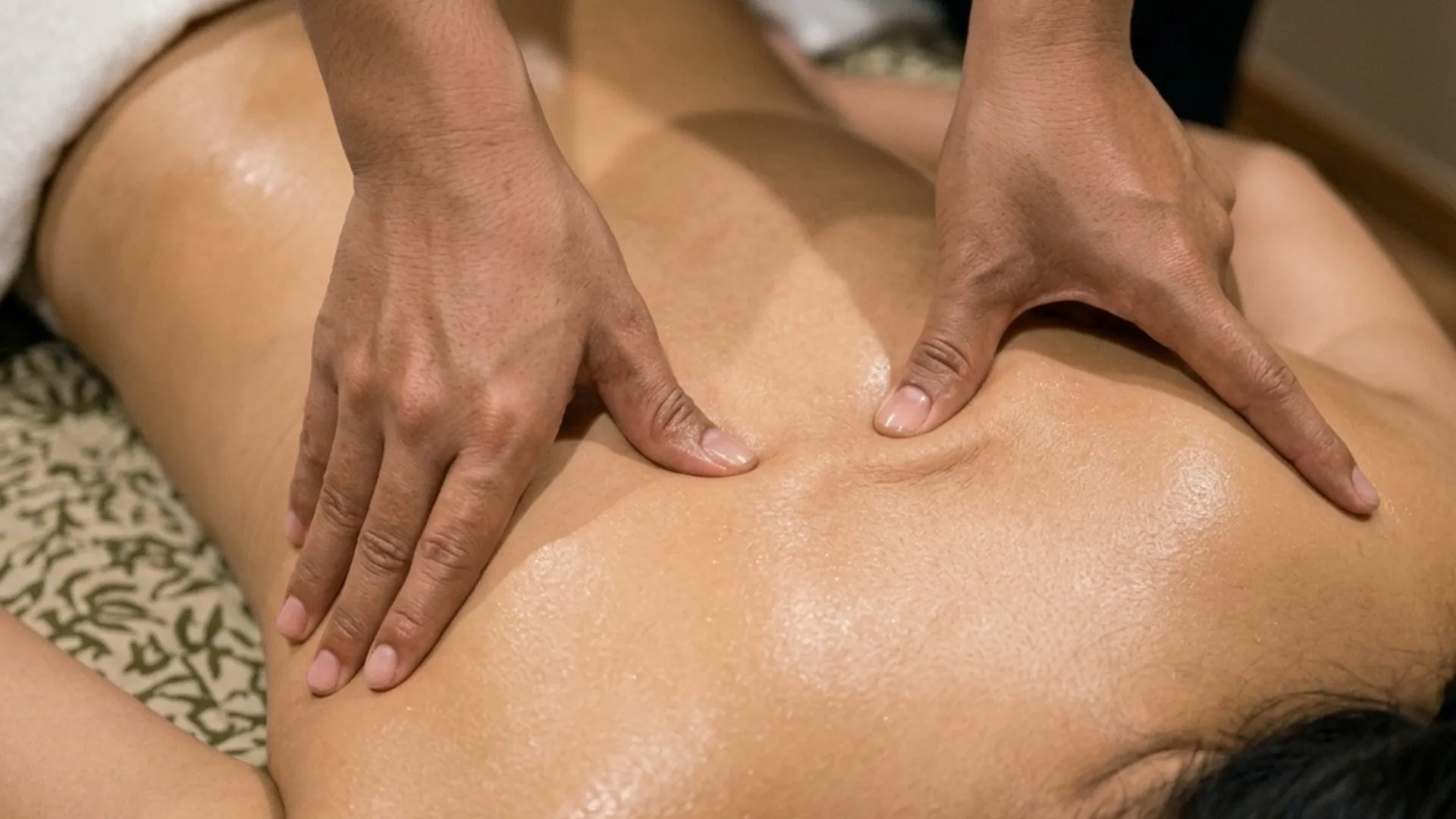 Types of Massage: The Main Styles ExplainedThe main types of massage, what each feels like and who it suits, with a table to help you choose.Read the guide
 Bali Belly: Causes, Prevention and What to DoWhat causes Bali belly, how to avoid it, what to do if you get it and when to see a doctor.Read the guide
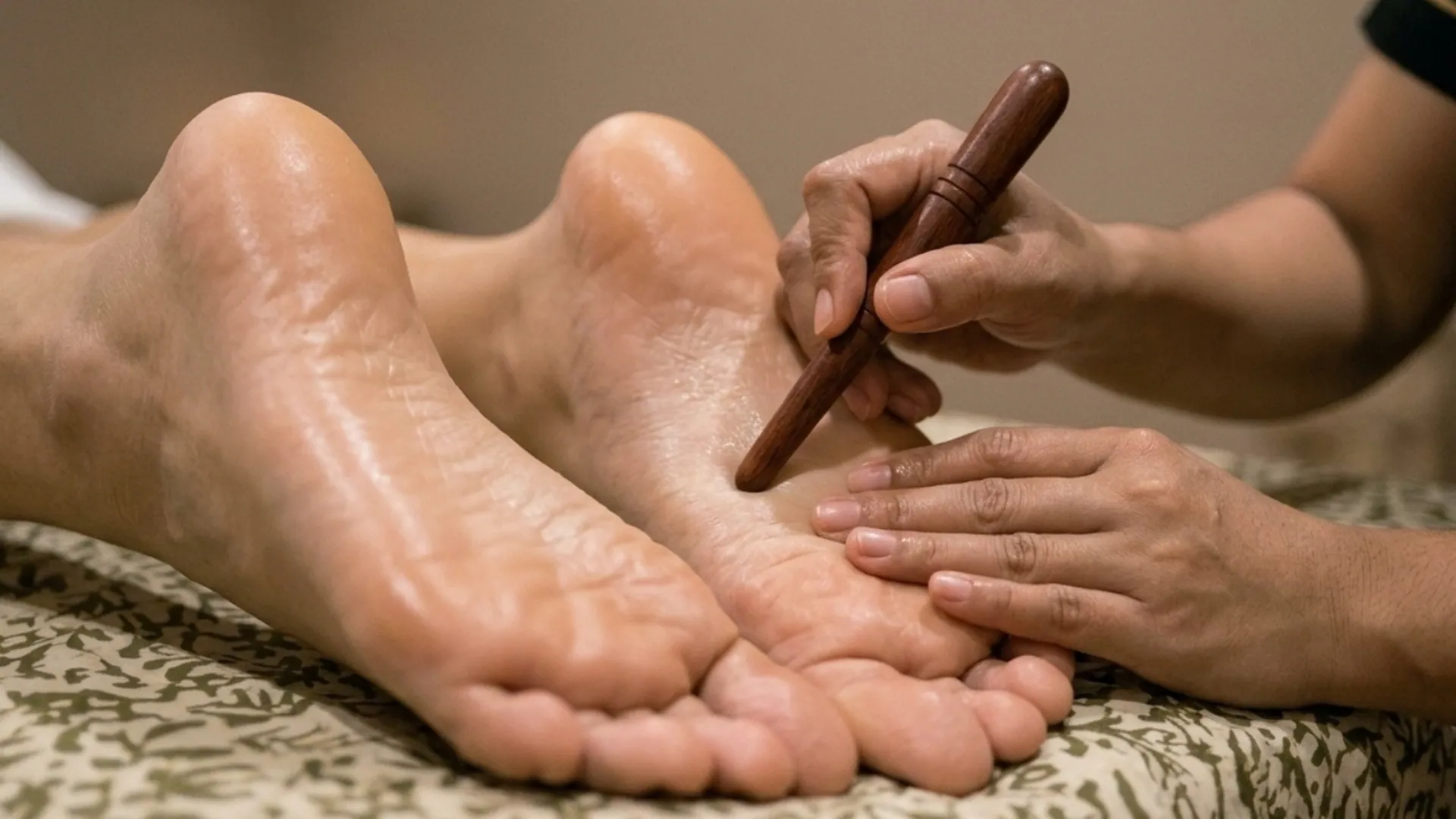 Foot Reflexology ChartA foot reflexology chart with every zone explained, how to read it, and what reflexology can and can't do.Read the guide